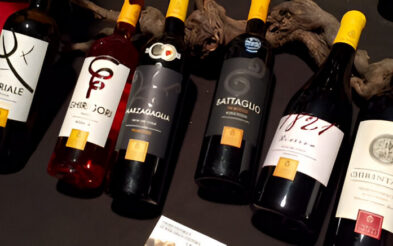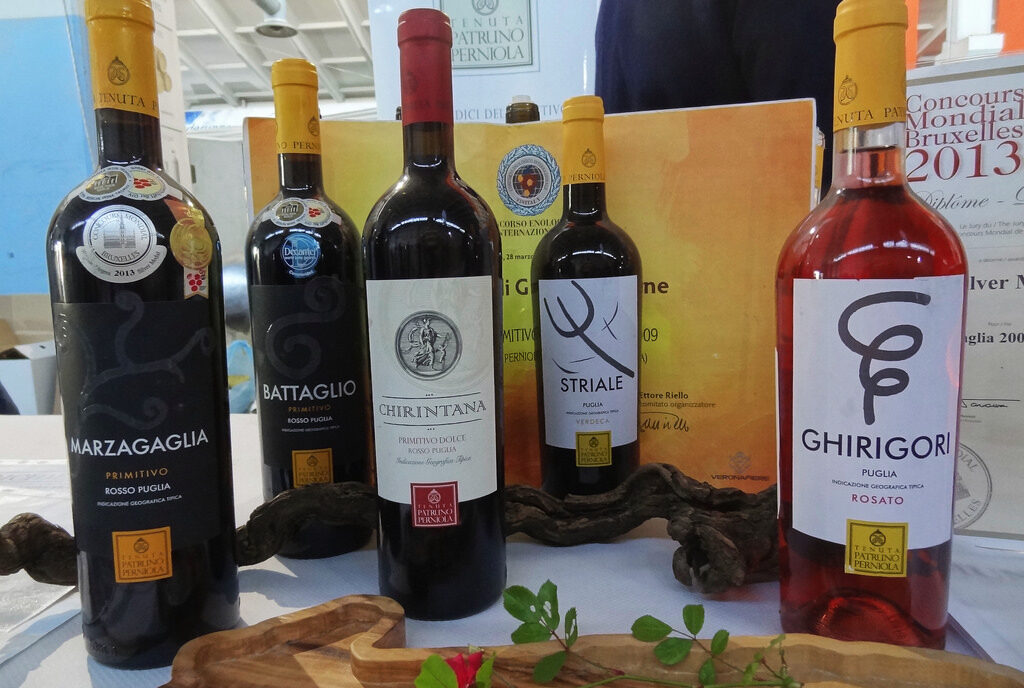
It was the family masseria, a white speck amid a sweep of vineyards in Gioia del Colle, in the Apulian Murgia. Forty-year-old Paolo Patruno turned it into the keystone of his life. He left his medical studies and devoted himself to Primitivo, restoring the 3-hectare vineyard. A selection (less famous than that of Primitivo di Manduria) classified as far back as the eighteenth century by a Benedictine monk.
We are in the hills, at 350 metres, and the soil is red with minerals. Patruno has chosen organic methods and produces 10,000 bottles a year. He has taken a middle path: neither excessive freshness nor too much ageing in wood. The result is a structure that is both substantial and soft. As in the estate’s flagship wine, Battaglio. A 100% Primitivo, it takes its name from the knocker on the main door of the Castle of Gioia del Colle. It moves from steel to small French oak barrels, has 14 degrees and costs 10 euros. The critic Paolo Massobrio is convinced that a second taste, 24 hours after opening the bottle, brings out even more elegance.
This is how winemaker Patruno describes himself:
I took my first steps in the vineyard with my grandparents. They taught me many things that seemed useless to me then, and that I now find very wise and practical. In 2005 I left Bari to come and live in the masseria, next to the vineyard. Only in the best vintages, we produce 8,000-8,500 bottles of Battaglio, a dry Primitivo di Gioia del Colle aged 8 months in barriques, and 1,000-1,500 of Chirintana, a naturally sweet Primitivo di Gioia del Colle made from grapes dried on the vine.
And on the choice of organic farming:
It is the continuation of my grandparents’ work, with the deep conviction of not wanting to have a negative impact on the environment. The concept is not limited to simply “not using herbicides or chemical fertilisers”, but extends to safeguarding biodiversity, using organic fertilisers without forcing plant growth, crop rotation and integrated pest management. On the estate we have chosen to use rainwater for irrigation and sanitation, fireplaces, olive pits and spent grape pomace (processing by-products) for heating, and we plan to build a small photovoltaic system to become self-sufficient in energy as well.
Share this page